

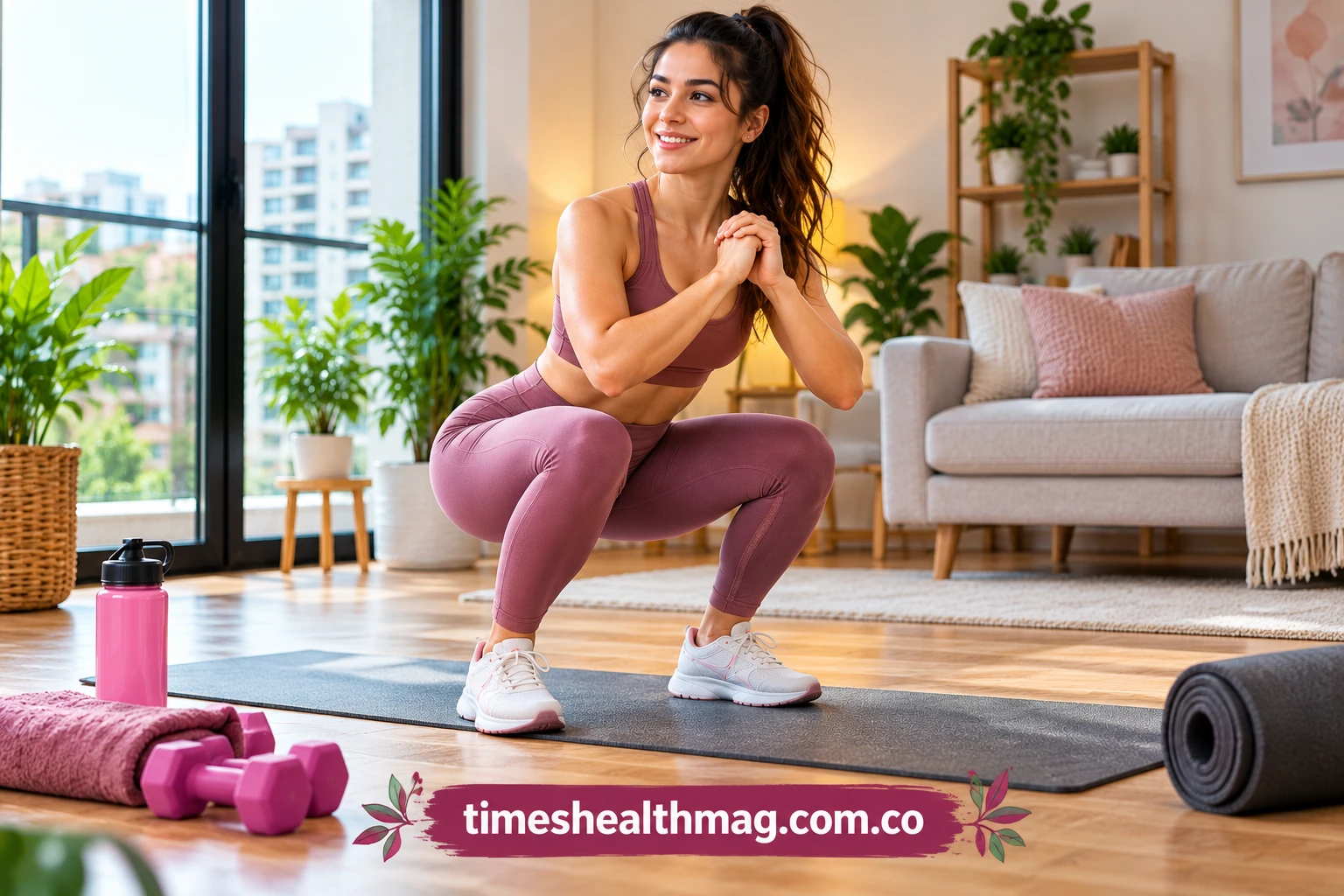
A quiet workout for apartment no jumping can help people stay active without disturbing neighbors, shaking the floor, or needing a large exercise area. A good apartment routine can use slow squats, wall push-ups, glute bridges, bird dogs, standing exercises, and gentle mobility movements instead of jumps or loud equipment.
At a glance
- Best for: Apartment living, shared homes, upstairs rooms, and small spaces
- Style: Low-impact and quiet
- Equipment: None required
- Main movements: Squats, wall push-ups, glute bridges, bird dogs, calf raises, and controlled leg movements
- Noise level: Low when movements stay controlled
- Space needed: About the size of a yoga mat
- Main goal: Regular physical activity without jumping or heavy impact
The CDC recommends that adults include aerobic activity and muscle-strengthening activity during the week, while the WHO also recommends regular physical activity across different age groups. Activity can be split into smaller periods, so a person does not have to complete one long workout to stay active.
Why Choose a No-Jumping Workout in an Apartment?
Jumping exercises can create footstep noise and vibration, which may travel through floors and ceilings. This can be especially noticeable in an upstairs apartment or a building with thin flooring.
A quiet routine replaces jumping with controlled movements. The aim is to keep the body moving while maintaining steady foot contact with the floor.
This approach can also be useful for people who prefer lower-impact exercise. Walking, controlled strength exercises, mobility work, and floor-based movements can all contribute to regular physical activity.
10 Quiet Exercises for an Apartment
The following exercises can be performed without jumping. They can be arranged into a short routine or used individually throughout the day.
1. Slow Bodyweight Squats
Stand with the feet about hip-width apart. Bend the knees and hips slowly, keeping the feet planted, then return to standing.
A slow pace reduces unnecessary noise and encourages control. A chair can be placed behind the body for extra support if needed.
Try: 8–12 controlled repetitions.
2. Wall Push-Ups
Place both hands against a sturdy wall at about chest height. Step back slightly, bend the elbows to bring the upper body closer to the wall, then gently press back.
Wall push-ups provide an easy way to work the chest, shoulders, and arms without getting onto the floor.
Try: 8–12 repetitions.
3. Glute Bridges
Lie on a comfortable mat with the knees bent and feet resting on the floor. Slowly lift the hips, pause briefly, and lower them with control.
Because the movement takes place close to the floor, it produces very little noise.
Try: 8–12 repetitions.
4. Bird Dogs
Start on the hands and knees. Slowly extend one arm and the opposite leg, pause, return to the starting position, and switch sides.
The movement should stay slow rather than swinging the arms or legs. A folded towel or exercise mat can make the floor more comfortable.
Try: 6–10 repetitions per side.
5. Standing Calf Raises
Stand near a wall or sturdy chair for balance. Slowly raise the heels, pause, and lower them back down.
There is no need to bounce or drop the heels. Keeping the movement controlled makes this a particularly apartment-friendly exercise.
Try: 10–15 repetitions.
6. Standing Knee Raises
Stand upright and slowly lift one knee to a comfortable height. Lower it quietly and repeat on the other side.
The exercise can be made easier by holding a wall or chair. It also adds gentle movement without requiring jumping.
Try: 8–12 repetitions per side.
7. Sit-to-Stand
Use a stable chair placed against a wall. Sit down under control, then stand up without pushing off aggressively.
This movement can be useful for practicing everyday leg strength while keeping both feet connected with the floor.
Try: 8–10 repetitions.
8. Side Leg Raises
Stand beside a sturdy chair or wall. Slowly move one leg out to the side and bring it back without swinging.
The movement should remain small and controlled. There is no need to lift the leg very high.
Try: 8–12 repetitions per side.
9. Wall Calf and Lower-Leg Stretch
Place both hands against a wall and step one foot back. Keep the back heel comfortable against the floor while gently shifting the body forward.
This works well as part of a cool-down after a quiet workout.
Hold: About 15–30 seconds per side, without forcing the stretch.
10. Gentle Marching in Place
March slowly without bouncing or lifting the knees aggressively. Keep the feet close to the floor and use controlled steps.
For an especially quiet routine, the emphasis should be on smooth movement rather than speed.
Try: 1–3 minutes.
A Simple 15-Minute Quiet Apartment Workout
Someone looking for a short routine can combine several of these exercises.
| Exercise | Suggested time |
|---|---|
| Gentle marching | 2 minutes |
| Slow squats | 2 minutes |
| Wall push-ups | 2 minutes |
| Standing knee raises | 2 minutes |
| Glute bridges | 2 minutes |
| Bird dogs | 2 minutes |
| Calf raises | 1 minute |
| Gentle stretching | 2 minutes |
The routine can be shortened or extended based on comfort and fitness level. The focus should stay on controlled movement rather than trying to make the session harder.
How to Make an Apartment Workout Quieter
The exercises themselves are only part of the solution. Small changes to the workout setup can reduce noise further.
Use a mat
A firm exercise mat can soften contact between the body and floor. It is particularly useful for floor exercises such as glute bridges and bird dogs.
Keep the feet connected to the floor
Avoid hopping, bouncing, or quickly stepping from one position to another. Slow transitions are usually quieter.
Control every repetition
Dropping the body into a squat or letting the heels hit the floor can create unnecessary sound. A slower tempo can make the routine much quieter.
Avoid heavy equipment
Weights can make noise if they are placed on hard flooring. Bodyweight exercises are usually enough for a basic apartment routine.
Choose a suitable time
Even a quiet workout can be noticeable in a very quiet building. Exercising during reasonable daytime or early-evening hours may help reduce disturbances.
Quiet Cardio Without Jumping
Cardio does not have to involve running or jumping. A person can use low-impact movements such as:
- Walking indoors
- Marching slowly in place
- Step-touch movements
- Controlled knee raises
- Dancing without jumps
- Walking up and down stairs where appropriate
- Outdoor walking when available
For adults, the CDC recommends at least 150 minutes of moderate-intensity aerobic activity per week, along with muscle-strengthening activity on at least two days. These minutes can be divided across the week rather than completed in one session.
For teenagers, WHO recommends an average of at least 60 minutes of moderate-to-vigorous physical activity each day, with muscle- and bone-strengthening activities included at least three days per week.
These are general activity guidelines rather than a requirement to complete a particular apartment workout.
How to Build a Quiet Routine
A simple weekly pattern can make activity easier to maintain.
| Day | Activity idea |
|---|---|
| Monday | Quiet strength routine |
| Tuesday | Easy walking or gentle movement |
| Wednesday | Quiet strength routine |
| Thursday | Light movement or rest |
| Friday | Quiet strength routine |
| Saturday | Walking or recreational activity |
| Sunday | Rest or gentle mobility |
The schedule can be changed based on school, work, family commitments, energy levels, and other activities. Regular movement matters more than following one fixed routine.
Common Mistakes to Avoid
A quiet workout can still become uncomfortable if the movements are performed poorly.
Moving too quickly
Speed is unnecessary. Controlled repetitions usually make exercises easier to manage and quieter.
Using an unstable chair
Any chair used for support should sit firmly on the floor. Avoid chairs that roll, slide, or wobble.
Ignoring pain
Mild effort or muscle fatigue can happen during exercise, but sharp or persistent pain should not be pushed through. Stop the movement and seek appropriate medical guidance if pain continues.
Trying to make every session intense
A workout does not need to leave someone exhausted to be useful. Activity can be built gradually, particularly after a period of inactivity. WHO recommends that inactive people begin with smaller amounts and gradually increase duration, frequency, and intensity.
Is a No-Jumping Workout Effective?
Yes. A workout does not need jumping to include useful movement.
Squats and sit-to-stands can work the legs, wall push-ups can work the upper body, bridges can strengthen the hips and trunk, and standing movements can keep the body active.
The bigger picture also matters. Physical activity can come from exercise, walking, household tasks, recreation, and other forms of movement. WHO notes that some activity is better than none.
Who Can Benefit From a Quiet Apartment Workout?
A low-noise routine may suit:
- People living in upstairs apartments
- People with downstairs neighbors
- Students living in shared accommodation
- People exercising in a bedroom
- Beginners who prefer simple movements
- People who do not have exercise equipment
- Anyone looking for a low-impact alternative to jumping exercises
People with injuries, chronic health conditions, or other concerns about exercise should get guidance from a qualified healthcare professional before changing their activity routine. The CDC also recommends discussing suitable activity with a healthcare professional for people with certain chronic conditions or disabilities.
FAQs About Quiet Apartment Workouts
What is the quietest exercise to do in an apartment?
Floor-based exercises such as glute bridges and bird dogs are generally very quiet. Wall push-ups, slow squats, calf raises, and controlled standing movements can also work well.
Can a workout be effective without jumping?
Yes. Strength exercises, walking, low-impact cardio, mobility exercises, and controlled bodyweight movements can all contribute to regular physical activity without jumping.
How can someone exercise upstairs without disturbing neighbors?
Keeping both feet connected to the floor, moving slowly, using a suitable exercise mat, avoiding dropped equipment, and choosing reasonable workout hours can help reduce noise.
Is marching in place noisy?
It can be quiet if the feet stay close to the floor and each step is controlled. Avoid bouncing or stomping.
What can replace jumping jacks?
Step-touch movements, slow marching, standing knee raises, and controlled side steps can provide movement without the repeated impact of jumping.
Is 15 minutes of exercise useful?
Yes. Short activity sessions can contribute to overall physical activity. Adults can divide activity into smaller periods throughout the week rather than completing everything in one session.
Does apartment exercise require equipment?
No. Many basic exercises can be performed with body weight alone. A comfortable exercise mat may be useful for floor movements, but it is optional.
Final Takeaway
A quiet workout for apartment no jumping can be simple, practical, and easy to fit into a small space. Slow squats, wall push-ups, bridges, bird dogs, calf raises, standing knee raises, and gentle marching can create a useful low-noise routine without jumping.
The best routine is one that fits the person’s space, ability, schedule, and comfort level. Starting with manageable activity and gradually building up can make regular movement easier to maintain.
Disclaimer
This article is provided for general educational information by TimesHealthMag.com.co. It is not a substitute for medical diagnosis, treatment, or individualized advice from a qualified healthcare professional. Anyone with an injury, medical condition, persistent pain, or concerns about starting exercise should seek appropriate professional guidance.